Revolutionizing Finance with Cutting-Edge Tech
Mark London ; 2026-08-29 18:38
The financial sector is undergoing a profound transformation, driven by advancements in artificial intelligence (AI). Financial institutions are increasingly adopting AI to enhance the customer experience. This article delves into how AI is reshaping financial services, especially in the area of personalized banking solutions and their role in boosting customer satisfaction.
AI's Role in Finance
Artificial intelligence encompasses a suite of technologies that emulate human cognitive abilities. In the financial realm, this includes machine learning, natural language processing, and predictive analytics. These technologies enable financial institutions to process vast amounts of data, identify patterns, and automate processes, thereby increasing operational efficiency. The integration of AI allows banks to streamline operations, reduce costs, and sharpen decision-making processes, benefiting both the institutions and their customers.
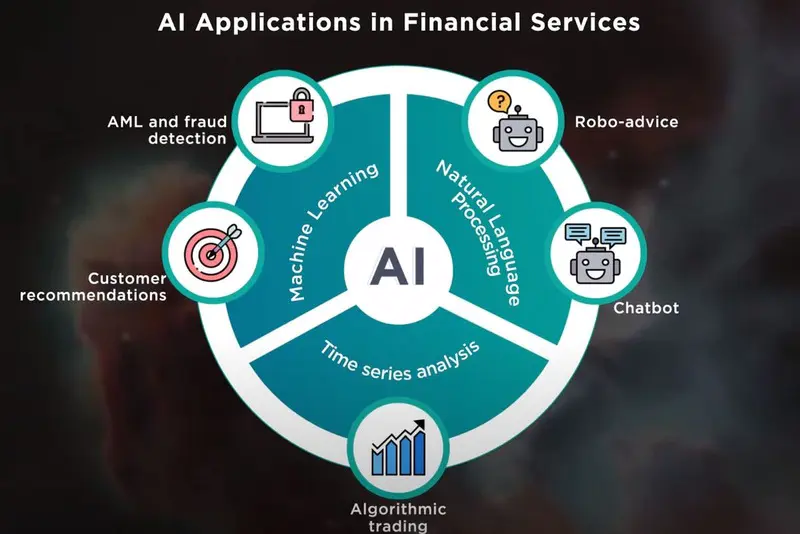
AI goes beyond automating tasks; it also enhances the understanding of customer needs. By analyzing historical and current data, AI can provide insights into customer preferences, enabling more targeted service personalization. This deeper understanding strengthens the connection between financial institutions and their customers, fostering long-lasting relationships.
Data-Driven Decision Making: AI supports decision-making through comprehensive data analysis.
Operational Scalability: AI enables the efficient scaling of financial services to meet expanding customer demands without compromising on quality.
Enhancing Customer Interaction
AI's influence on finance is particularly evident in its ability to enrich customer interactions. AI-powered chatbots and virtual assistants provide immediate responses to customer inquiries, improving response times and accessibility. By handling routine queries, these systems allow human staff to focus on more complex issues. Additionally, AI analyzes customer interactions to identify common concerns and areas for improvement, enabling ongoing service enhancements.
Beyond just reactive responses, AI systems can anticipate customer needs based on past interactions. This proactive approach increases customer satisfaction and loyalty by addressing issues before they arise, creating a seamless and valued customer experience.
Proactive Engagement: Timely anticipation and resolution of customer needs lead to higher satisfaction and loyalty.
Feedback Loop: Continuous analysis of customer interactions helps refine service strategies and improve service delivery.
Tailored Banking Solutions
AI's data processing capabilities allow financial institutions to offer banking solutions that cater to individual customer needs. By examining customer behavior and transaction histories, AI can recommend products and services that align with their preferences. For example, AI might suggest personalized investment options based on a client's risk profile or provide financial advice based on spending patterns. This level of customization not only meets customer expectations but also encourages loyalty, as clients perceive their banks as understanding and valuing them.
Customization extends to marketing, where AI can tailor communications to individual preferences, increasing engagement and conversion rates. By effectively leveraging personalization, banks can strengthen their customer relationships.
Targeted Communications: Personalization in marketing leads to higher engagement and conversion rates.
Loyalty and Retention: Satisfied customers are more likely to remain loyal and refer services to others, driving growth.
Risk Management and Fraud Prevention
AI is crucial in strengthening risk management and fraud detection within financial services. Machine learning algorithms can analyze transaction patterns in real-time, identifying anomalies that suggest fraudulent activities. By leveraging historical data, AI tools can predict potential risks and assess the likelihood of loan defaults or investment losses. This proactive approach protects institutions from significant losses and safeguards customers by ensuring the security of their information and assets.
The implementation of AI in fraud detection systems can significantly speed up the identification of suspicious activities. This rapid response capability helps prevent losses before they escalate and maintains customer trust. These systems continuously evolve their ability to detect fraudulent behaviors by learning from new data.
Real-Time Surveillance: AI enables continuous transaction monitoring, facilitating the swift identification of fraudulent activities.
Adaptive Learning: Machine learning models improve over time, adapting to new fraud patterns and emerging threats.